
Best Mesh Bags for Shell Collecting: What to Look For
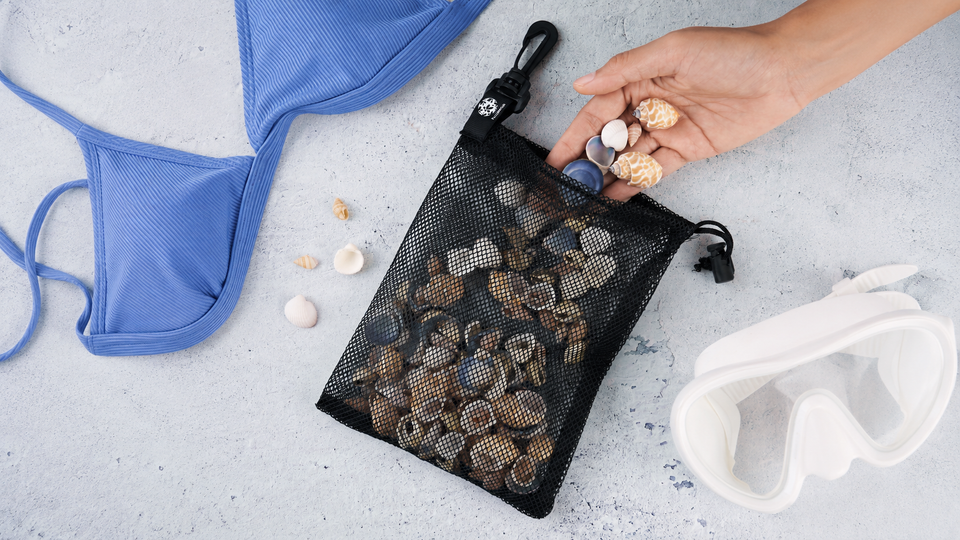
Key points
- Mesh allows water and sand to drain naturally.
- Drawstring closures help keep shells secure while moving.
- A clip makes it easy to attach the bag to a belt, backpack, or snorkeling gear.
- Choose a size based on the type of shells you expect to collect.
- Quality stitching and durable mesh matter more than appearance.
- Remember that advertised bag dimensions may not always reflect the full usable opening.
Introduction
Whether you’re searching for seashells along the shoreline or snorkeling over shallow reefs, carrying your finds can quickly become inconvenient. Holding shells in your hands limits your movement, while plastic containers trap water and sand and become surprisingly bulky.
A mesh drawstring bag solves many of these problems with a simple design. It keeps your collection together while allowing water and sand to pass through, making it one of the most practical accessories for recreational shell collecting.
The practical problem
Most people begin shell collecting without giving much thought to how they will carry what they find. Pockets quickly fill with sand. Plastic bags collect water and become awkward to carry. Buckets work for larger collections but are cumbersome while walking long distances or snorkeling.
Snorkelers face an additional challenge. They need both hands free for swimming, climbing onto rocks, or adjusting equipment. A loose shell collection can easily be dropped or lost. The ideal solution should be lightweight, secure, easy to rinse, and comfortable enough to carry throughout the day.
Why a mesh drawstring bag works
Mesh bags are particularly well suited to beach environments because they work with water rather than against it. As you leave the water, excess water drains away immediately instead of pooling inside the bag. Sand also falls through the mesh during rinsing, reducing the amount you carry home.
A drawstring closure helps prevent shells from spilling out while you’re walking or swimming. Many designs also include a small clip, allowing the bag to be attached to a waistband, backpack, dive belt, or beach bag so your hands remain free.
Users also appreciate that a well-made mesh bag can withstand repeated outdoor use. When constructed with durable mesh and reinforced stitching, it can tolerate regular exposure to sand, salt water, and rough surfaces far better than many disposable alternatives. Because the contents remain visible through the mesh, it’s easy to see your collection without constantly opening the bag.
Limitations and common mistakes
No bag is perfect for every situation. Very small shells, tiny pieces of sea glass, or fine coral fragments may pass through larger mesh openings. If you mainly collect miniature specimens, choose a finer mesh instead of a coarse one.
Mesh bags are also not waterproof. They are designed to drain water, not keep items dry. Electronics, paper items, and anything sensitive to moisture should be carried separately. Another common mistake is overloading the bag with heavy shells or rocks. Although quality mesh is surprisingly durable, excessive weight places unnecessary strain on the stitching and drawstring.
Finally, pay attention to the usable opening rather than relying only on the advertised dimensions. Some buyers notice that the actual opening can be slightly narrower than expected because of the way the drawstring channel is constructed. This usually isn’t a major issue, but it’s worth considering if you plan to collect larger shells.
How to choose the right specification
Start by selecting an appropriate size. Small bags work well for shell collecting during casual beach walks or snorkeling trips where you expect to collect only a modest number of shells. Larger bags are better suited to longer outings or family beach trips.
Look for reinforced stitching around the drawstring channel, as this area receives the greatest stress during regular use. The drawstring should slide smoothly while closing securely enough that shells cannot easily escape. If you’ll be snorkeling, kayaking, or climbing over rocks, a built-in clip adds considerable convenience by allowing the bag to remain attached to your equipment instead of being carried by hand.
Finally, choose a mesh material that feels sturdy without becoming unnecessarily heavy. A balance between strength, flexibility, and drainage generally produces the most practical bag.
Business and wholesale applications
Mesh drawstring bags are widely used beyond individual recreation. Dive shops often include them as practical accessories for snorkeling customers. Beach resorts may offer them to guests participating in marine activities. Educational marine programs and aquariums can use them during guided shoreline exploration, while eco-tour operators may provide reusable collection bags instead of disposable plastic bags.
They are also suitable for gift shops, souvenir stores, environmental organizations, and tourism businesses looking for reusable products that can be customized with logos or branding.
Conclusion
For shell collecting and snorkeling, a mesh drawstring bag offers a combination of simplicity and practicality that few alternatives can match. Its ability to drain water, release sand, and keep both hands free makes it an ideal companion for exploring beaches and shallow coastal waters.
Choosing the right size, durable construction, and a secure closure will provide years of reliable use. While mesh bags have limitations, particularly with very small objects or heavy loads, they remain one of the most effective and convenient solutions for recreational shell collectors.
Published by Palterwear
This article is part of The Drawstring Bag Library, published by Palterwear.
Palterwear develops custom bags for businesses and organizations worldwide. Depending on your project, bags can be customized with different sizes, mesh types, colors, drawstring styles, closures, printed logos, woven labels, and retail packaging. Learn more at Palterwear.